


Creative Journey
Soo… I dove head first into game development by attending The Art Institute of Atlanta (RIP). I knew I was an all around creative in high school, but didn’t realize how perfect that was for game development until I was getting ready to graduate with my Bachelors degree in Game Art & Design. During college I picked up skills in industry standard tools like Photoshop and Unreal. I even gained a deeper understanding of storytelling, art fundamentals, and sequential art, which proved helpful for all my creative passions. Concepts that today, I’d be lost without. Unfortunately, in spite of the robust art training put in place that made me more hirable, I felt our curriculum fell short on extensive design education. I really wanted to dive in on creating worlds that never existed and making them feel real. Experiences that made the brain wonder, while playing the chord of enjoyment like an instrument. Instead of focusing on getting a job in the game industry, I wanted to make my own games and communicate to the player directly. This led me to one day searching on YouTube “How to make a game?”. In 2011, online resources and tutorials were nowhere near the volume they are at today. However, I did find a tutorial on Unity 3d that I could follow along. I downloaded the engine, played around with the code, and began making my own projects before I graduated college. Though my games were small and simple, they helped my portfolio stand out among my peers. I was proud of myself for making the decision to be one of one, and for doing the work that started my indie developer career.
Because I wasn’t making commercial projects yet, I still had to find a job to pay the bills. I was able to find contracts here and there, but if I’m honest, my heart wasn’t in it. Although I recommend higher education, I was recognizing the writing on the wall. I was in a bubble in which attending college led to inflated student loan debt and a not so secure job market, which I quickly had to navigate. Thankfully, according to the internet, I wasn’t the only one trying to figure out my path in games post graduation. The tide was shifting and independence started becoming sustainable, even profitable. Content creators began making careers with online tutorials or “let’s plays” of other games. Unity, GameMaker, and Unreal 4 all being free and heavily documented, lowered the barrier of entry and opened the flood gates for new developers. Platforms like Steam, the iPhone, and Xbox 360 made publishing accessible for small teams and solo devs. Also the success stories of games like Minecraft, Castle Crashers, and Braid became modern examples of the American dream. It was possible, and those who persevered, became rockstars. Indie Game The Movie proved that by documenting a few games and their developers through the hard times. By committing to your passion, learning what you have to to make it work, and not giving up, your game can find its audience and your bills can be paid. It wasn’t that the gatekeepers and publishers were dead, we just didn’t need them or their legacy contracts anymore. Even if you’re not doing everything yourself, there was a diversity of ways to partner, meaning more control for the one with the idea.
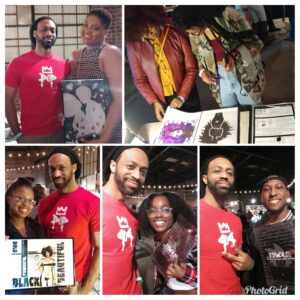 My senior year in college, I began branding myself as Ron Jones The Artist. I didn’t do much art at the time, but I really wanted to lean into my identity as an artist because, if I’m honest, it made it easier for me to engage people and validate myself. I fell in love with photo-manipulation, brushes, and textures using Photoshop. After a lot of mimicry and experimentation, I found a couple of styles that I could call my own and that made me feel unique. Not only is this an important milestone for every artist, it began my journey of understanding the just as important concept of copyright law. In a digital world where things could be copied with a button, thrown under a filter, and sold without the original illustrator even knowing, it was real easy to just call something “my art”. It took some honesty and creative maturity to find that line of what “fair use” was for myself. I’ve seen the same conversations taking place in video games. What makes something a clone versus a fresh take on an unique experience? Asking myself this was great practice for me as both an artist and game designer. As I continued to grow in my medium of choice, I found myself frustrated with the turnaround time for completing a game, so I always kept one foot in art. Being able to create and finish an illustration, print, and comic was rewarding. This led me to begin doing art shows regularly, and finally learning what work of mine people would actually pay money for.
Discovering Success
It’s a different kind of success being able to create something from nothing, set a price above the cost of materials, and someone agree with you that it has value. This was the process that gave me success at art shows with my digital prints and comic book. Sadly, if you’ve followed the cost of development and prices of games in the last 15 years, you would understand how little this experience translates. From following and studying these trends over the years, I think that the sketching and A/B testing phases need to be more open and less expensive. However, since the industry doesn’t yet function like this because we bet everything on a grand release, indie game developers can discover how to break the mold. Much like artists in film or music, indies must navigate the tension between producing something quick for revenue and taking the time to create meaningful work that may be rewarding but slow to pay off. As developers, we all ask questions to ourselves about design: What will be mechanically attractive or visually eye catching? What will stop people from scrolling and them to follow a link to play? But we can be left with even more questions as we wrestle with the tension between meaning vs. making money: Do I want to be the designer who tries to create a deeper meaning behind every detail, which may take years of my life as a beginner coder? Or do I just focus on making a cookie cut game that people play mindlessly and I can quickly generate revenue from the ads? The latter is much easier, hence why the market is oversaturated with these types of games. Personally, because of the artist part of me, I find it difficult to work on projects that don’t challenge me and feel purposeful. I have to be proud of it. I love the development of That Dragon Cancer, the hand drawn work of Cuphead, and the 4th wall narration of The Stanley Parable. These were indie projects that not only made it to the finish line, but walked away memorable.
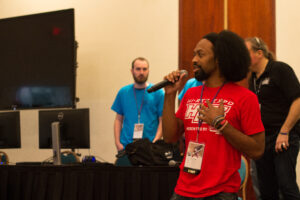
All that being said, the years of development it took to carefully craft these amazing games, is a process that is becoming more and more unreliable. Even with the many free resources available today, the rising cost of just being alive means developers have far less time to build a game without needing a steady income. The idea of making games full-time will only work if your income is supplemented by games you already made, contract work, or funding assistance. For every Stardew Valley, there’s a hundred games you’ve never heard of or weren’t good enough to sell. Devs need to be salesmen, accountants, social media managers, and community builders all on top of everything they need to be for the game. There has to be a better path to get great games to players. That’s partly why I founded The Indie Cluster, as a modular studio and publisher alternative. We can help developers with testing, community building, and reaching players outside their circle. The demand for new experiences is higher than ever. To be fair, AAA is trying to keep up. However the cost of making games has increased so much, it’s a huge risk not knowing if a game will sell or not. Thus frowned upon practices like paid DLC and season passes offset the costs. Out of the box ideas need to be faster for the industry to stay afloat. This is why indies are so important and will always need to be adaptable. There’s a huge demand for interactive content and the frontier has barely been explored.
Carving A New Path
I’ve been saying forever that games are the future. However, what does that really mean? I think with the rise of the metaverse and AI, technology is becoming more of a lifestyle, not just a tool. Games have always been art that you can interact with, but we must stop thinking of them as just entertainment. The data on engagement levels alone, warrants incorporating them into our everyday life. The surface hasn’t even been scratched for virtual spaces with real world utility. Unfortunately it’s mainly been the sharks and ad companies gamifying the attention we give to screens. What if we gamify society’s problems like climate change or clean water. If citizens earned gift cards to recycle or do neighborhood chores. Just think what devs can do when they’re not trying to chase Steam sales. Working for the chamber of commerce or a local hospital as a Director of Virtual Experiences. We can easily create interactive challenges that boost sales, drive teamwork, and spread a message for businesses. Even playable ads haven’t been integrated and fully taken advantage of yet. Scaling like that often requires subcontractors and clients that only focus on the bottom line. So is that just a path to soullessness? There has to be an ethical way to scale and grow the industry, right? I want to find that healthy balance between staying independent and having a high level producing operation, which often times means having financial partners and many other moving pieces. If a game studio has those additional elements, can they no longer call themselves independent? It’s always been a badge of honor calling myself an indie developer. But shouldn’t it be just as rewarding to be an indie studio owner? Am I too caught up in using the term “indie dev”?
For creatives, our authenticity is really our most prized possession. For example, if a music artist doesn’t write all their own lyrics, generally that is still acceptable. However, if we were to learn that AI or someone else is singing their songs, we’d question their artistry and authenticity. So, how does this fine line of authenticity translate in game development? I may be overthinking this, but honestly I don’t think these types of conversations are happening enough in indie games. I think the dilemma lies in the art form needing others to make a more efficient product. Filmmakers often need actors and camera crews, just like a musician may need a producer, writer, and feature, all to create a final product. It seems in these industries when more is needed from the production, the ones in these roles still claim the project as their own. I had to uncouple this for myself, my artistry and the production, and normalize using help. A game can’t be great if it just stays an idea. I have to put together the team and tools to make it, push it through development, and then move on. It’ll never be perfect, but I can always go back and add or rerelease. Execution is the secret weapon of working artists, not talent. I mean, that is why I called myself an artist all those years ago, right? Saying I’m an artist out loud helped me make it true and walk down that path with my actions. I choose to keep calling myself an artist, and I choose to redefine what that means for my games. I need to be okay using readymade assets and streamlining the process to focus on design. Game Designer, and maybe Director, are the roles I really wanted to do anyway. I can always do the art, sound, etc here and there if I choose to, as long it doesn’t weigh down the creative process. Leaning into accepting this was really a breakthrough for me. At the end of the day, I’d rather have my many projects completed than be able to say I developed two or three dream games all on my own. What is it that makes you think you need to do the work by yourself? Whatever that is, just remember that it’s not more important than getting your ideas out into the world. So let’s make the vision clear and get to work.


2 Responses
Great article!
Great information about the gaming world and the personal challenges of voice and art!